THE FEARS
Let's disarm the fears first
"I'll embarrass myself."In front of whom? There's no grid of rivals judging you — your session is yours, with a certified instructor whose entire profession is taking first-timers from tense to flowing. Slow, deliberate early laps aren't embarrassing; they're the curriculum.
"I'll break a very expensive car." The car is insured, the environment is a closed, state-licensed circuit with proper run-off — not a public road with oncoming traffic — and the instructor beside you manages risk continuously. You are, counterintuitively, about to do some of the most supervised driving of your life.
"I'm not skilled enough for a track." If you can drive to work, you have every prerequisite. Track driving is ordinary driving with better geometry and no distractions — and the techniques are taught on the day, not assumed. The majority of EXR drivers arrive with zero track history.
THE CHECKLIST
What to wear and bring on your first track day
- Shoes
- Closed, flat-soled — sneakers are perfect
- Clothes
- Comfortable, unrestrictive — no dress code
- Documents
- Valid driver's license (foreign accepted)
- Desert extras
- Water, sunglasses, sunscreen (Arad)
- Leave at home
- Sandals, heels, loose scarves, nerves
- Provided for you
- Car, fuel, insurance, instructor, cameras
Notice what's missing: helmets-you-must-buy, racing suits, gear lists. A guided experience day carries none of the equipment burden of hobbyist track days — you bring yourself and a license; the operation brings everything else, cameras included.
THE BRIEFING
What happens in the briefing (and your first laps)
Every session opens on the ground. The instructor walks you through the layout — at Arad, that's 14 corners and an official pit lane — explains braking references and the driving line, sets hand signals and in-car communication, and answers the questions you were embarrassed to ask. It's conversational, it's in English, and it exists to replace your imagination (which invents disasters) with a plan (which prevents them).
Then, the part no guide can fully convey. Your first laps are gentle — learning where the track goes. Around lap three or four, something clicks: you brake where you were told, the corner opens exactly as described, and you feel the car work. From there the instructor feeds you speed in increments you're ready for. By the final laps, the driver who was nervous in the parking lot is negotiating for one more session.
YOUR FIRST CAR
Choosing a first car, honestly
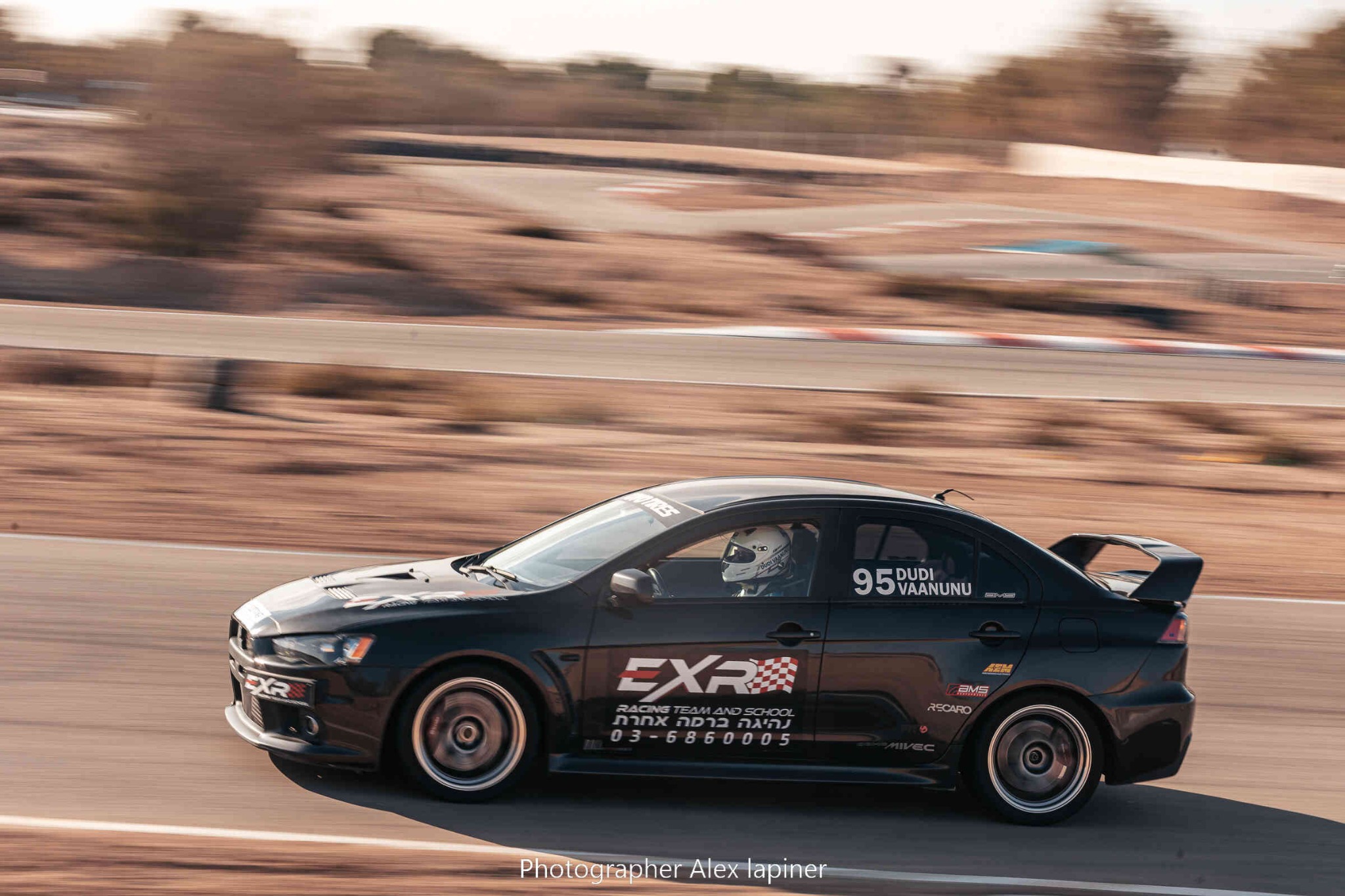
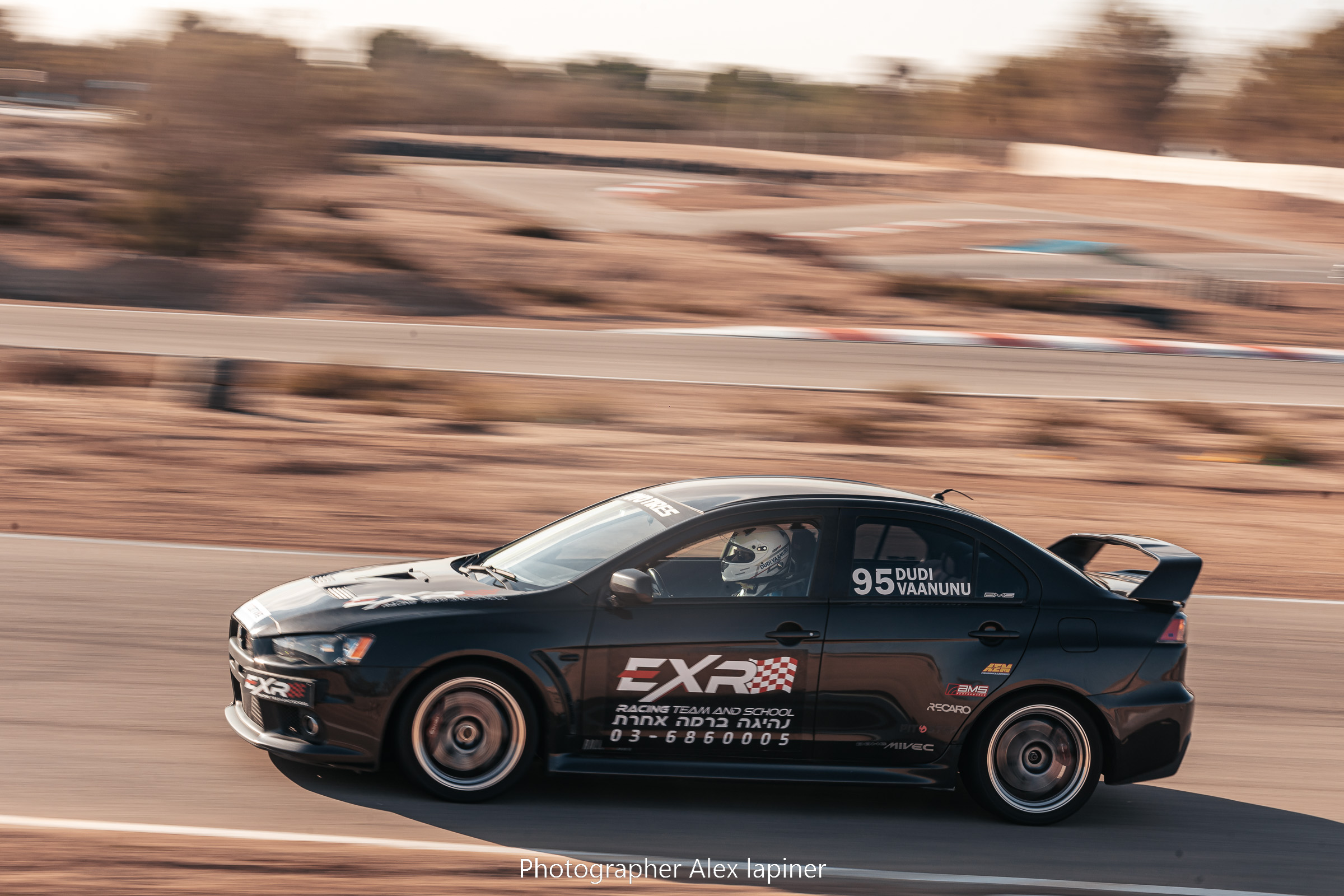
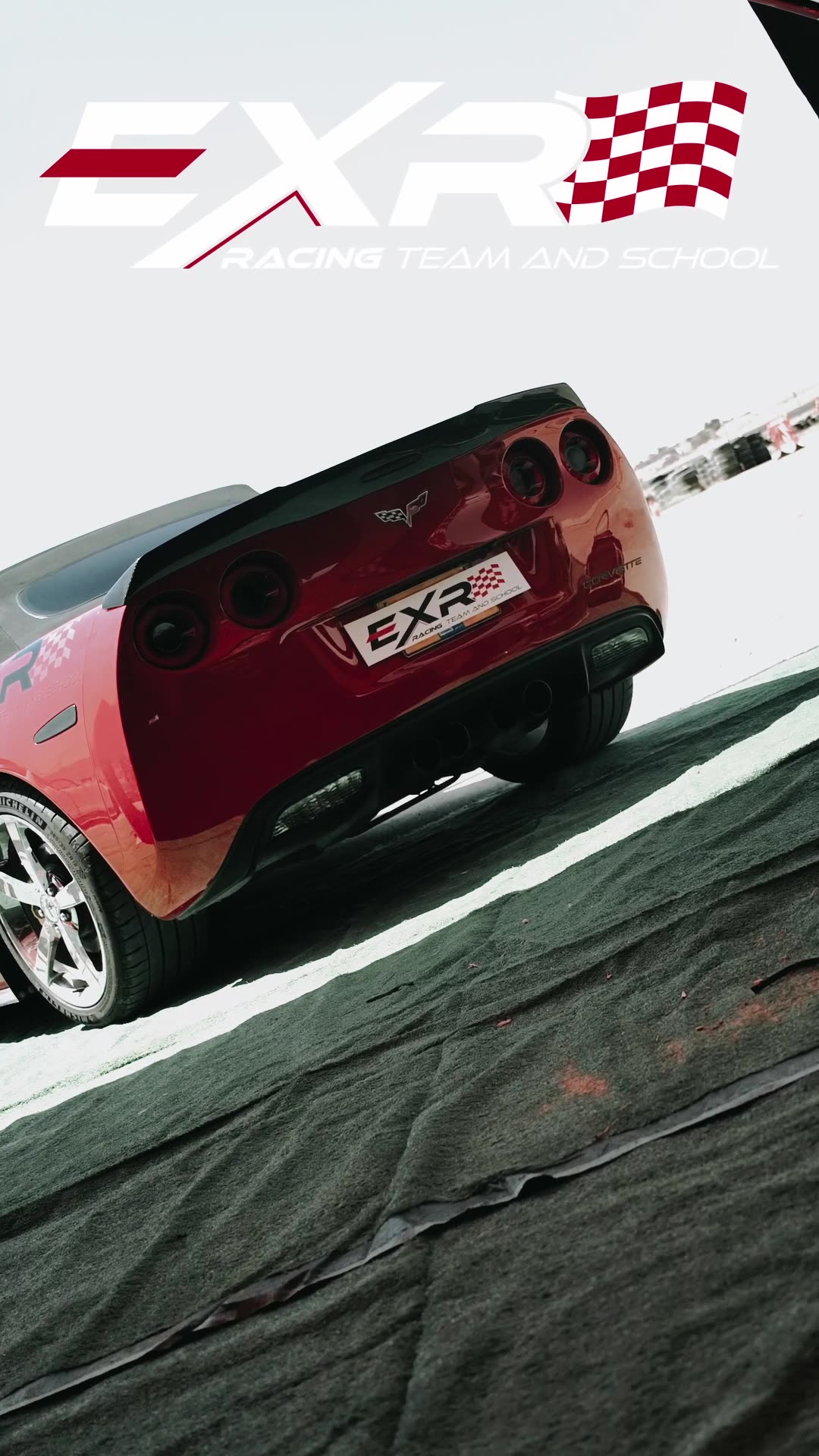
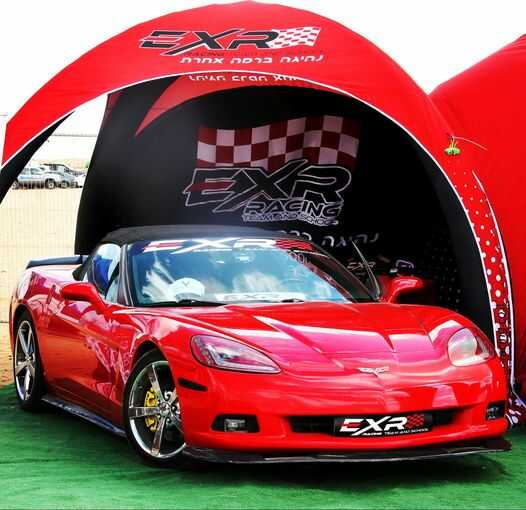
Beginners agonize over this more than they need to, because the instructor adapts the session to any of the three. Still, the honest hierarchy: the BMW M240 — balanced, predictable, turbo straight-six — is the classic first pick. The EVO X's four-wheel-drive grip is wonderfully forgiving in corners, if you're happy with (or curious about) its manual gearbox. The 450-hp Corvette C6 is the deep end — a spectacular first car for the bold, entirely manageable with coaching. The full comparison goes deeper, and the cars page has the spec sheets.
Cost-wise, a first session starts at ₪1,000 — about $270 for roughly an hour of driving — with formats up to ₪8,000 for a full day (details on the pricing page). When you're ready, message +972-50-661-0451 on WhatsApp, say the words "first time", and the team takes it from there. For the wider picture of how the whole day runs, read the race driver for a day guide next.
FAQ
Frequently Asked Questions
What should I wear to my first track day?+
Closed, flat-soled shoes (sneakers are ideal — no sandals, no heels), comfortable clothes you can move in, and sunglasses. The Arad track is in the desert, so add sunscreen and bring water. No special racing gear is required.
What do I need to bring?+
Just your valid driver's license — foreign licenses are accepted — plus the clothing above. The car, fuel, insurance, instructor and camera coverage are all provided; there's genuinely nothing else on the checklist.
What happens in the safety briefing?+
Before you drive, the instructor walks you through the circuit layout, braking references, how the session is structured and how to communicate in the car. It's conversational, in English, and designed to replace nerves with a plan.
What if I'm slow? Will I hold anyone up?+
No — this isn't an open track day with traffic to manage. Your session is yours, the certified instructor beside you sets a pace that fits you, and speed builds lap by lap only as your confidence does. 'Slow first laps' are literally the syllabus.
Which car should a beginner choose?+
The BMW M240 (turbo straight-six, famously balanced) is the friendliest starting point; the EVO X's 4WD grip flatters cautious drivers in corners; the 450-hp Corvette C6 is the boldest pick. Any of the three works — the instructor adapts the session, not you.
How much does a first track day cost in Israel?+
Beginner-friendly formats start at ₪1,000 (about $270) for roughly 60 minutes of driving; longer formats scale to ₪8,000 for a full day. Briefing, insurance, instructor and video/photos are included at every price point.
KEEP READING
More guides you'll enjoy
Every driver here had a first lap
Tell us on WhatsApp that it's your first time — the session gets built around exactly that, at your pace, in English.